

Currently, there are hundreds of smartphones in the market;
some are meant for just calling and messaging while others are multi-purpose.
Few mobile phones have advanced camera capability while others are sold with
gaming as their USP. There are huge-display bearing smartphones too which are
suitable for executive who are always on the go and thus need a device that
would not only serve as a mobile phone but also can act as a computing device.
In a nutshell, mobile phones can be categoriesed into
different genres, each suitable for some purpose. But since each genre has
several contenders, finding the one that would suit your requirement is
certainly an arduous task. Thus to help you find the suitable phone as per your
needs, we at The Mobile Indian tried to segregate different aspects of a mobile
phone in this article.
Display
The best way to judge a smartphone's screen is to look at it from different angles for changes in colour, and also in varying lighting conditions for visibility. Invest in a Full HD (1080p) display if you're buying a phablet. On the other hand, HD (720p) screens work well for devices up to five inches in size. On smaller devices, load a web page to see if the text is crisp, and can be read without any strain to your eyes.
The best way to judge a smartphone's screen is to look at it from different angles for changes in colour, and also in varying lighting conditions for visibility. Invest in a Full HD (1080p) display if you're buying a phablet. On the other hand, HD (720p) screens work well for devices up to five inches in size. On smaller devices, load a web page to see if the text is crisp, and can be read without any strain to your eyes.

In any case, avoid smartphones with lesser than WVGA (800x480px) resolution. AMOLED screens are best when it comes to displaying punchy colours. LCD screens with IPS technology comes a close second, while TFT LCDs should be avoided if you can.
Size
In our experience, a screen of four to five inches works well for most purposes.
A phone that has a screen bigger than five inches could be slightly uncomfortable to use with one hand. Also keep in mind that big-screen phones are heavy, and can be uncomfortable to carry in your pocket.
On the flip side, large screens allow for a better experience while watching movies, playing games and browsing the web.
In our experience, a screen of four to five inches works well for most purposes.
A phone that has a screen bigger than five inches could be slightly uncomfortable to use with one hand. Also keep in mind that big-screen phones are heavy, and can be uncomfortable to carry in your pocket.
On the flip side, large screens allow for a better experience while watching movies, playing games and browsing the web.
Processors
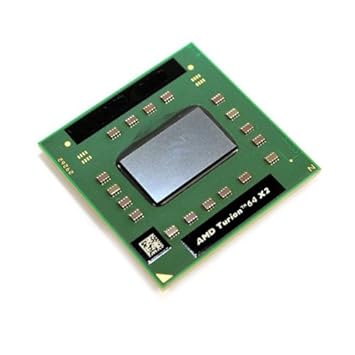
When shopping, you are bound to hear about dual-core , quad-core , and even octacore processors. But what should you put your money on?
While a greater number of cores are supposedly better, it does not give you a true picture of how a smartphone may perform. Why? Well, not all cores are designed identically. UK-based ARM, which designs these chips, licenses different architectures - with names such as Cortex A5, A7, A8, A9, A12, A15 - to manufacturers. Here, higher numbers mean better chips. In effect, a phone that uses a quad-core A15 will definitely be more advanced than a handset with a quad-core A5. In fact, there might be instances where dual-core processors might fare better than quad-core chips.
Also, a lot of how a processor performs depends on how the OS utilises its abilities. So an iPhone on a dual-core processor could be a bett er performer than many quad-core Android phones.
That said, these are some of the names you can expect to hear when shopping... Qualcomm's quad-core Snapdragon 600 and 800 chips, Samsung's octacore Exynos, and Apple's dual-core A7 (found on the iPhone 5s, and not to be confused with ARM's Cortex series) are the top dogs in this market.
Devices like the Nokia Lumias use mid-range dual-core Qualcomm S4 chipsets that are also seen in handsets like the Samsung Galaxy Grand Quattro and the Sony Experia M. Older iPhones use a dualcore A6 processor (again, not to be confused with ARM Cortex).
In the mid- to low-price brackets, you'll find dual-core Intel Atom chips, the quadcore MediaTek MT6589, and Qualcomm's dual-core Snapdragon 200 and 400.
When shopping, you are bound to hear about dual-core , quad-core , and even octacore processors. But what should you put your money on?
While a greater number of cores are supposedly better, it does not give you a true picture of how a smartphone may perform. Why? Well, not all cores are designed identically. UK-based ARM, which designs these chips, licenses different architectures - with names such as Cortex A5, A7, A8, A9, A12, A15 - to manufacturers. Here, higher numbers mean better chips. In effect, a phone that uses a quad-core A15 will definitely be more advanced than a handset with a quad-core A5. In fact, there might be instances where dual-core processors might fare better than quad-core chips.
Also, a lot of how a processor performs depends on how the OS utilises its abilities. So an iPhone on a dual-core processor could be a bett er performer than many quad-core Android phones.
That said, these are some of the names you can expect to hear when shopping... Qualcomm's quad-core Snapdragon 600 and 800 chips, Samsung's octacore Exynos, and Apple's dual-core A7 (found on the iPhone 5s, and not to be confused with ARM's Cortex series) are the top dogs in this market.
Devices like the Nokia Lumias use mid-range dual-core Qualcomm S4 chipsets that are also seen in handsets like the Samsung Galaxy Grand Quattro and the Sony Experia M. Older iPhones use a dualcore A6 processor (again, not to be confused with ARM Cortex).
In the mid- to low-price brackets, you'll find dual-core Intel Atom chips, the quadcore MediaTek MT6589, and Qualcomm's dual-core Snapdragon 200 and 400.
Operating
system
Make no mistake, it's the OS that puts the 'smart' in your smartphone, so before buying, it's always a good idea to know about the different ecosystems that exist...
Android OS promises native integration with Google services that include Search, Gmail, Maps, Hangouts, YouTube, etc. Besides, you get access to over a million apps in its Play store. The best part? Titles that might be paid downloads on iOS and Windows Phone are sometimes available for free here. Another advantage of an Android handset is that these are plug-and-play . You can simply connect it to your PC via a USB cable to begin transferring files to and from the device with zero hassles. Also, you can choose from phones—costing as less as 4,000 right to those that are priced at over 50k—from vendors such as HTC, LG, Lenovo, Samsung, Sony, and even from local players like Karbonn, Lava, Micromax, Spice and Xolo. Just remember, Android versions are alphabetically named, and the latest in the market are Jelly Bean and Kit-Kat . Make sure you're putting your money on either of these.
Windows Phone is now playing catch-up with Android and iOS - and at last count, its app store just had over two lakh titles. Still, most popular apps have already made their way to this platform. Also, WP handsets in India primarily come from Nokia - and while the OS needs improvements, you get really good hardware for the price you pay. Plus, these devices come with subscriptions to free content like music and movies (depending on the model you buy), and also Here Maps and Drive+, which are arguably the best map and navigation services in the country.
iOS, only found in iPhones, is extremely intuitive to use - and since Apple vets every title that makes it to its App store, you're promised high-quality digital content in the form of educational material, music, videos and apps. The OS itself promises smooth operations, and you'll find very rare instances of iPhones freezing during use. On the downside, you'll have to use iTunes to connect the handset to your PC, and this can prove to be quite annoying. And yes, only buy from local authorised dealers; iPhones picked up from abroad are not covered under local warranty.
Make no mistake, it's the OS that puts the 'smart' in your smartphone, so before buying, it's always a good idea to know about the different ecosystems that exist...
Android OS promises native integration with Google services that include Search, Gmail, Maps, Hangouts, YouTube, etc. Besides, you get access to over a million apps in its Play store. The best part? Titles that might be paid downloads on iOS and Windows Phone are sometimes available for free here. Another advantage of an Android handset is that these are plug-and-play . You can simply connect it to your PC via a USB cable to begin transferring files to and from the device with zero hassles. Also, you can choose from phones—costing as less as 4,000 right to those that are priced at over 50k—from vendors such as HTC, LG, Lenovo, Samsung, Sony, and even from local players like Karbonn, Lava, Micromax, Spice and Xolo. Just remember, Android versions are alphabetically named, and the latest in the market are Jelly Bean and Kit-Kat . Make sure you're putting your money on either of these.
Windows Phone is now playing catch-up with Android and iOS - and at last count, its app store just had over two lakh titles. Still, most popular apps have already made their way to this platform. Also, WP handsets in India primarily come from Nokia - and while the OS needs improvements, you get really good hardware for the price you pay. Plus, these devices come with subscriptions to free content like music and movies (depending on the model you buy), and also Here Maps and Drive+, which are arguably the best map and navigation services in the country.
iOS, only found in iPhones, is extremely intuitive to use - and since Apple vets every title that makes it to its App store, you're promised high-quality digital content in the form of educational material, music, videos and apps. The OS itself promises smooth operations, and you'll find very rare instances of iPhones freezing during use. On the downside, you'll have to use iTunes to connect the handset to your PC, and this can prove to be quite annoying. And yes, only buy from local authorised dealers; iPhones picked up from abroad are not covered under local warranty.
Memory:
RAM- Smartphones like any computing device need
random access memory to execute programs. Thus higher the RAM amount, the
smoother performance would be. However, in smartphones you cannot upgrade RAM
as you can do in computers
256 MB- This is the bare minimum for a
smartphone. Devices with 256 MB RAM are slower and cannot do multi-tasking.
512 MB- A well-optimised smartphone can handle
mild games and do multi-tasking (2-3 programs at a time) but this is considered
as only the average amount of RAM one should go for in a smartphone
1 GB and above- For current level of computing in a
smartphone, 1 GB and above amount of RAM is sufficient. But go for 1.5 GB and
above RAM for ultra-smooth performance.
Internal:
Many apps cannot be installed on external SD card. Thus internal
storage is so important. Most smartphones these days come with 4 GB internal
storage while the maximu is 32 GB.
External:
You can upgrade the smartphone’s memory by inserting a micro
SD card slot. In general, smartphones come with 32 GB external card slot but
many high end devices offer up to 64 GB of storage slot.
Battery
You may have the best hardware at your disposal, but if you keep running out of battery, your handset is quite useless...
Bigger screens, extra cores, and more sensors mean greater power consumption. If you're considering a smartphone over 4.5-inches in size, look at devices that come with at least a 2000mAh (milliamp-hour) battery. The higher the mAh, the longer the battery will last.
You may have the best hardware at your disposal, but if you keep running out of battery, your handset is quite useless...
Bigger screens, extra cores, and more sensors mean greater power consumption. If you're considering a smartphone over 4.5-inches in size, look at devices that come with at least a 2000mAh (milliamp-hour) battery. The higher the mAh, the longer the battery will last.
If possible, select devices that come with lithiumpolymer batteries over lithium-ion . The former are lighter, and also retain their charge for longer.
And yes, preferably, buy a device that comes with a user-replaceable battery (although a handset like the Lenovo P780, which comes with a 4000mAh non-removable li-polymer battery, could prove to be an exception to the rule).
Camera
A 5MP camera is capable of 8x6-inch prints even at 300dpi (dots per inch), which is the standard resolution used in professional printing.
A 5MP camera is capable of 8x6-inch prints even at 300dpi (dots per inch), which is the standard resolution used in professional printing.
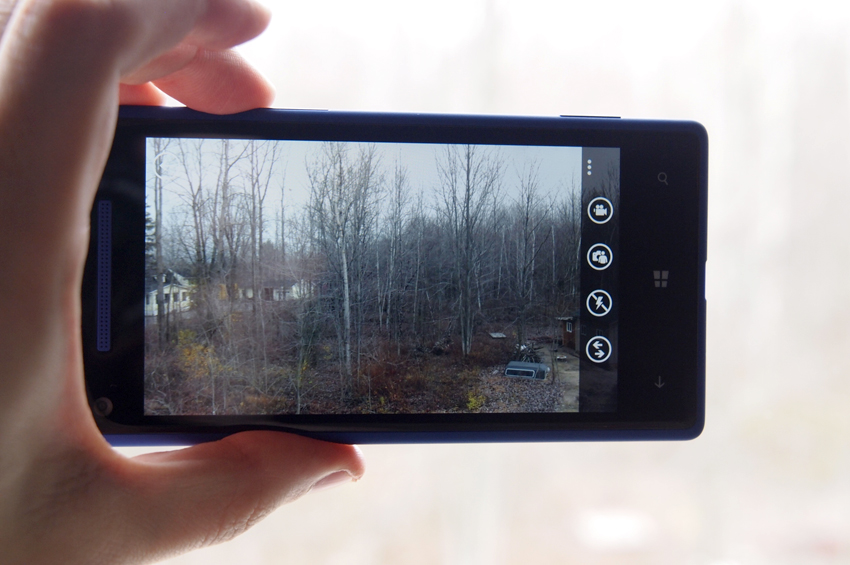
So, if you're looking for a good camera phone, dump the idea that more megapixels will give you better pictures. Instead, look for phones that boast of good camera optics (go for devices that come with Carl Zeiss lens). Remember, a high-resolution camera with a low-quality lens will only give you low-quality pictures in high resolution.
In any case, if you need a snapper only for photos you'd like to share on social networks or Instagram, a 10MP camera phone is going to be overkill.
Opt for cameras with BSI (backside illumination) sensors for better low-light photography; make sure it comes with an LED flash.
In our experience, if you want a good shooter, you have to shell out extra bucks. Good photos are a result of adequate megapixels, good lens and sensor technology, as well as high-end processor chipsets. The Nokia Lumia 1520, 1020 and 925, the Apple iPhones, the Samsung Galaxy S3, S4 and S4 Zoom, LG G2, and HTC One are known for their good snappers.
For your front-facing camera, one megapixel is more than adequate.
SIM slots:
A smartphone can have a single SIM, dual SIM or can even
have three SIM slots which though is quite rare these days. Choose the
smartphone on the basis of your requirement.
Besides, watch out for micro SIM and mini SIM and full SIM
slots.
Network:
2G: Many low cost smartphones these days come
with 2G only connectivity which mean that you cannot use your SIM connectivity
to access 3G.
3G: However, in dual SIM slot bearing
smartphones, usually one SIM is meant to access 3G network while the other is
meant for 2G networks. There are few smartphones though in which both SIM slots
can be used to access 3G networks
4G/LTE: Though many operators set to launch
their 4G or LTE services in India by the end of this year, there are currently
no handsets in the market to support the 4G network. Note that 4G handsets
launched in other countries are not meant for India as in our country apart
from Videocon all other operators are set to offer the FD-LTE version of 4G
while in most other international markets like the US and the European
countries TD-LTE version is being launched.
Connectivity:
There are various other connectivity options mentioned
below:
WiFi- With this feature you can connect your
smartphone to a nearest WiFi hub to access internet or to share files
WiFi Hotspot- It allows you to create a WiFi hub
and to share your mobile phone internet with others
Bluetooth- It is another kind of wireless
technology using which you can exchange data over short distances with other
Bluetooth enabled devices without using wires
USB port- Usually micro USB ports are found in
smartphones using which you can transfer files from your smartphone to your PC
or vice-versa quickly
NFC- Near Field Communication or NFC a set of
standards for smartphones and similar devices to establish radio communication
with each other by touching them together or bringing them into close
proximity, usually no more than a few inches.
HDMI- With this you can connect your smartphone
with your HDMI TV via an HDMI cable. However, no smartphone as of now come with
full HDMI port for size concern but many these days come with MHL port which
allows you to connect the device with the HDMI TV via a MHL cable. Few also
come with mini or micro HDMI port
DLNA- Digital Living Network Alliance or DLNA
allows you to wirelessly connect your smartphone to an HDTV or other
DLNA-enabled device. This is ideal for sharing movies, videos, and pictures on
your HDTV. FM receiver- With this you can listen to FM radios
GPS- To take full advantage of maps applications
like Google Maps and Map My India, your smartphone should have GPS or Global
Positioning System that helps you accurately pin-point your current
Sensors:
Ambient Light Sensor- It detects the amount of
light around the user and automatically adjusts the brightness of the screen.
Proximity Sensor- It senses when you hold the
phone against your face and disables the touch screen so you don't accidentally
hang up during your call
.
Accelerometer- It detects movement and is thus
required for screen rotation and gaming
Gyro sensor- It senses the angular momentum and
is essential for some games
Other Features:
Scratch-Resistant Glass: It protects one of the
most important parts of your smartphone.
Water Proof: Water proof mobile phones can be
immersed under water. Usually, mobile phones get IP (International Protection
Marking) code underling their resistance against water. Any device with IpX7 (X
stands for their dust resistance capability) or above rating can be immersed
under water.
Water Resistant: Phones with water resistance
can withstand splashes but won't survive if immersed under water. Many devices
come with water repelling coating which are considered as water resistant.
However, officially water resistant devices get IPX6K to IPX0 rating (X stands
for their dust resistance capability) for their water repelling ability.
Dust Proof: Mobile phones are classified in a
scale of 0-6 depending upon the level of protection against dust. Usually, the
first digit in IP rating (ex. IP67) indicates the level of protection. For
instance, if a phone is gets IP67 rating it means the phone's internals are
fully protected from dust.
No comments:
Write commentsThanks for comment...